This is a small travel site about China. It exists because friends kept asking the same question: "I finally got around to visiting China — where do I actually go?" These are the places I'd send them. Real photos, short honest notes, and a hotel link for each stop. That's it.
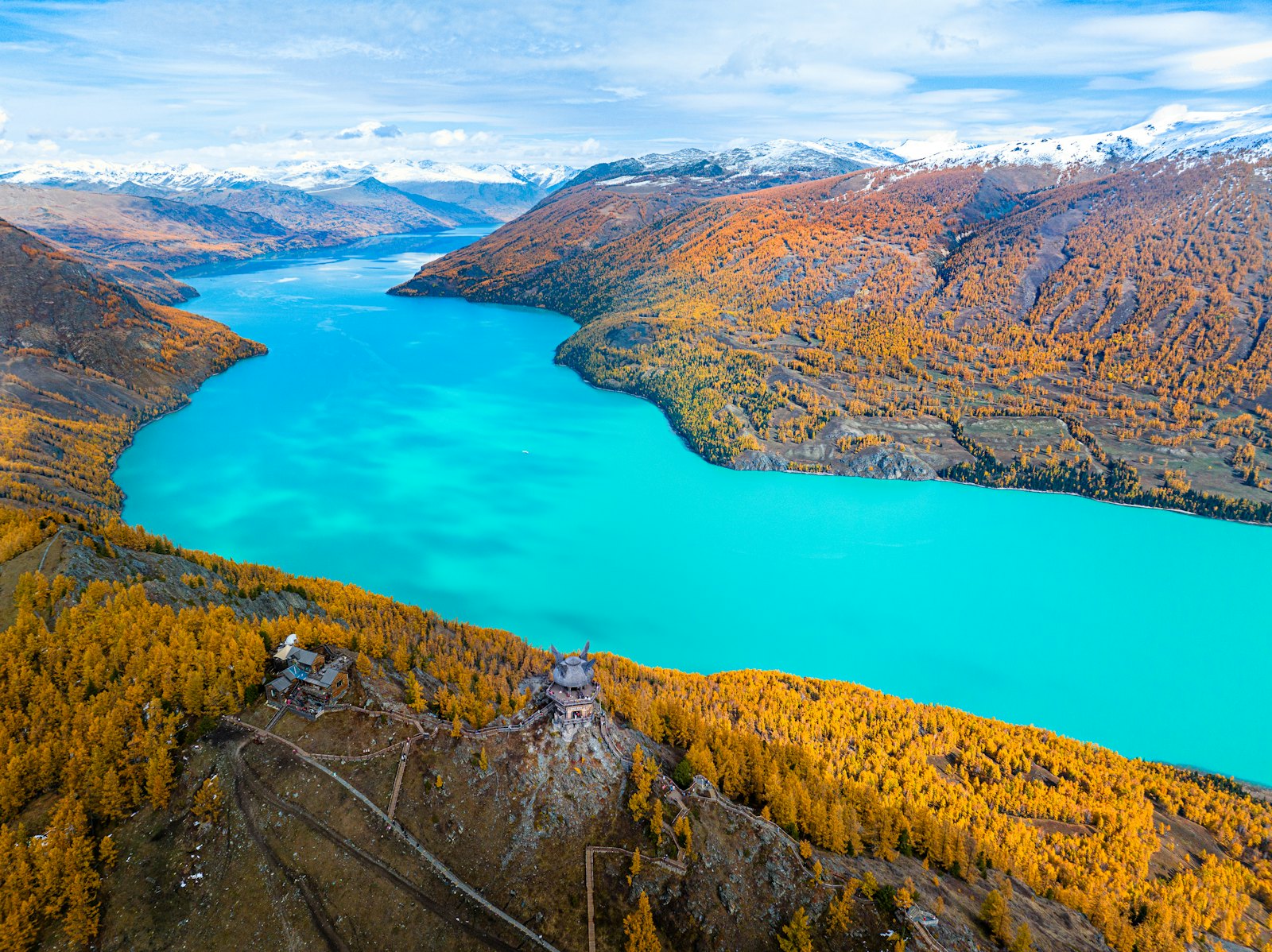
Kanas Lake, northern Xinjiang, in late September. Yes, the water really is that color.
A practical note before the pictures: most visitors no longer need a visa. Dozens of passports get 30 days visa-free, and many others qualify for 240-hour visa-free transit. Payments and trains are easy once your phone is set up. Details in Before you go.
The big four cities
Beijing, Shanghai, Guangzhou, Shenzhen — the four everyone starts with, each for a different reason.
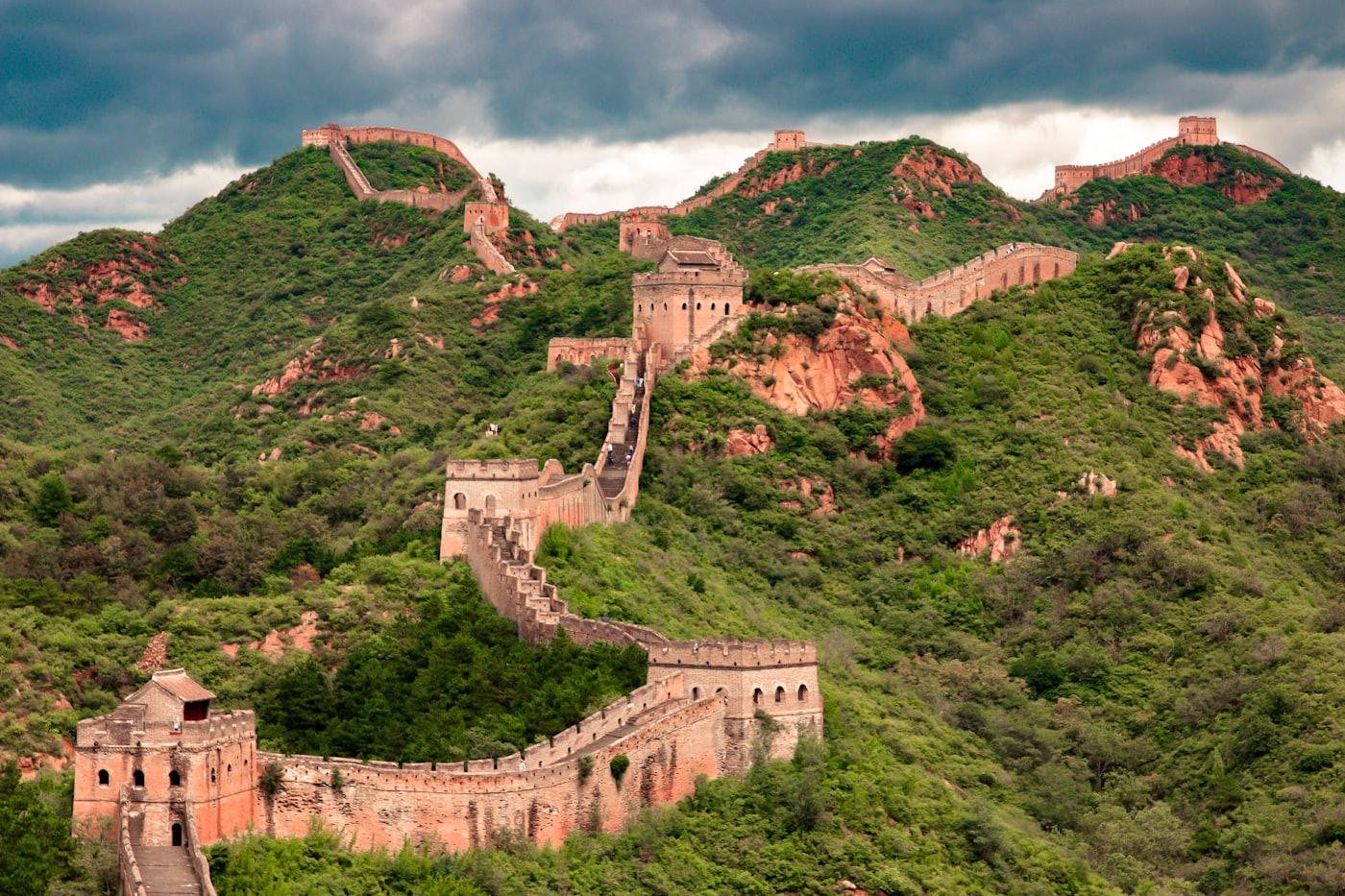
The Wall at Jinshanling, about two hours from Beijing. Fewer crowds than Badaling, better views than almost anywhere.
Beijing
Give the capital three full days: one for the Forbidden City and Jingshan hill behind it (book the palace a few days ahead; it's closed Mondays), one for the Great Wall, one for wandering hutong lanes and eating Peking duck. For the Wall, skip the tour-bus circus at Badaling and go to Mutianyu or Jinshanling instead.
Best months are September and October: dry air, blue skies, the city at its most likable. Stay inside the Second Ring Road near a metro station in Dongcheng if you can; you'll walk out of your hotel into old Beijing instead of commuting to it.
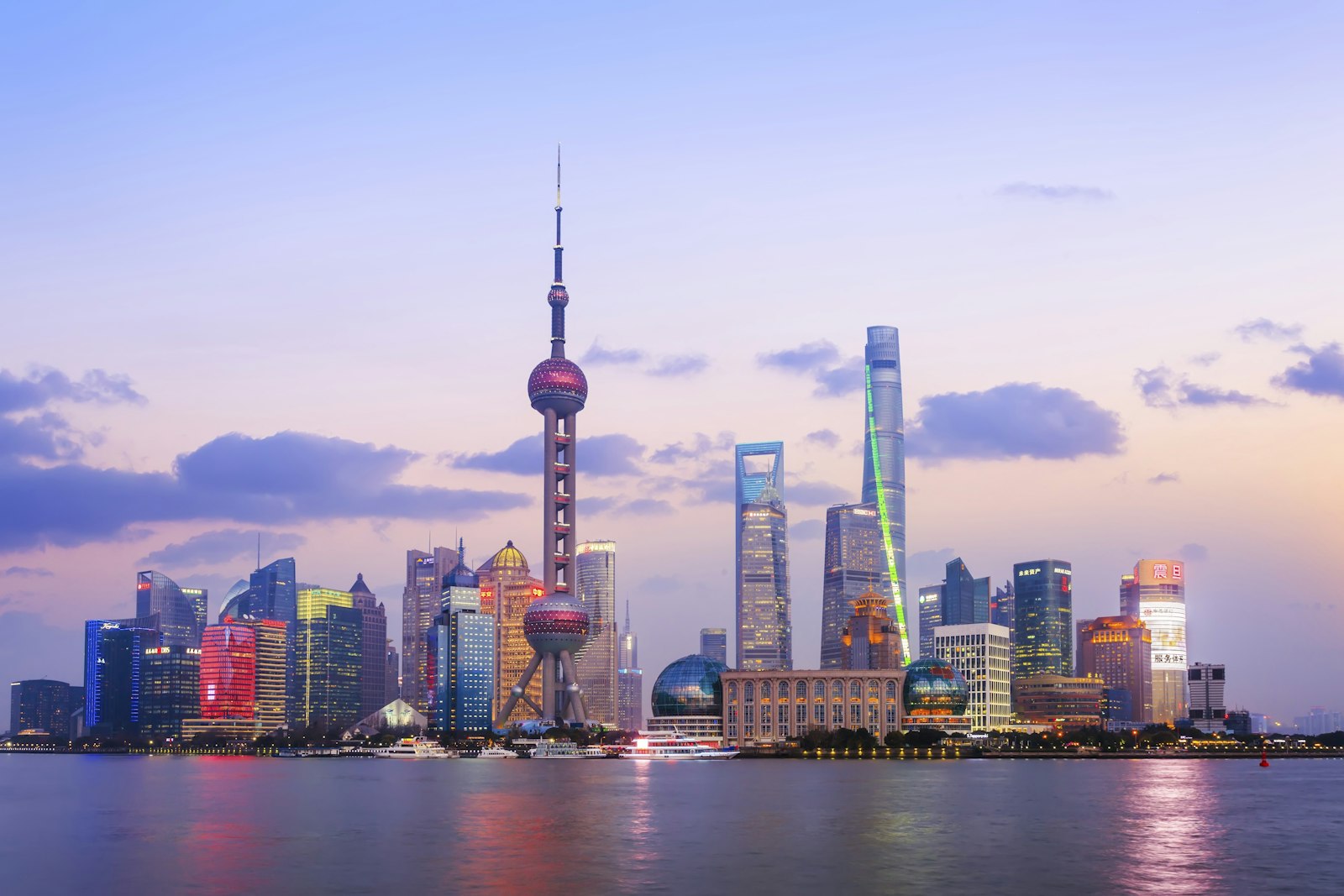
Pudong from the Bund at sunset. The nightly light-up starts around 7pm and is free.
Shanghai
Shanghai is the easy landing: English signage everywhere, a metro that goes everywhere, and food from every province. Walk the Bund at night, then spend a slow day in the former French Concession — plane-tree streets like Wukangli, small coffee shops, no sights to tick off, which is the point.
Two days covers the city; add a third for a water-town day trip (Zhujiajiao is the closest). Eat xiaolongbao at a no-frills place, not a mall chain. Stay near People's Square or along metro Line 1 and you can reach everything.
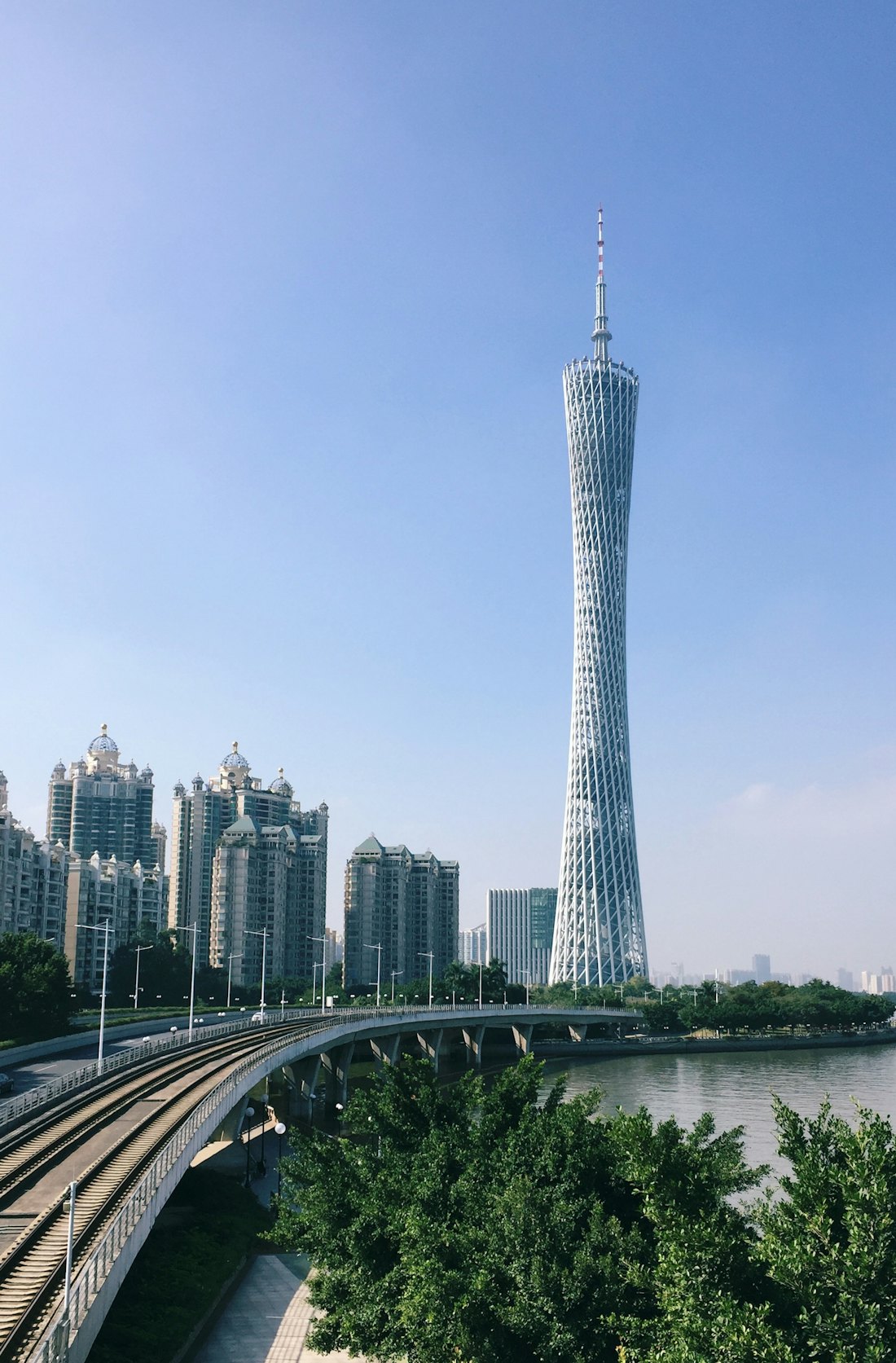
Canton Tower above the Pearl River. Come back after dark when it lights up.
Guangzhou
People fly to Guangzhou to eat, and they are correct to. Morning tea — yum cha — is the local institution: go early to a big old teahouse, point at carts of dumplings, stay two hours. The dim sum your hometown Chinatown serves was invented here, and it tastes different at the source.
Between meals: the restored lanes of Yongqing Fang, colonial arcades on Shamian Island, and a Pearl River cruise past the Canton Tower at night. October to December is the pleasant season; summer is a sauna. Stay in Zhujiang New Town for the skyline or near Beijing Road for the old city.
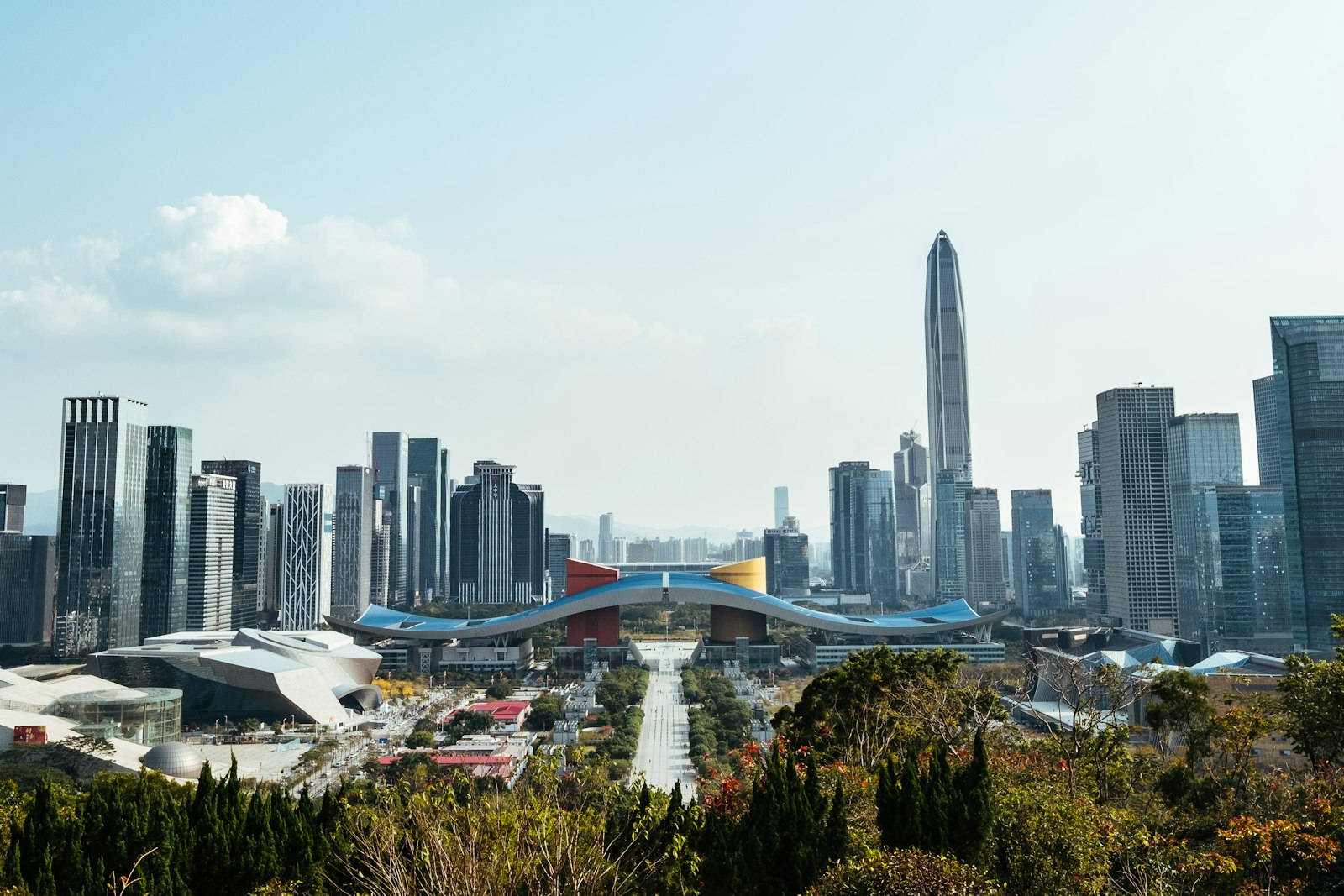
Downtown Shenzhen from Lianhuashan hill. In 1980 this was farmland.
Shenzhen
Shenzhen went from fishing town to 17-million-person tech capital in one generation, and walking around it still feels slightly science-fictional: delivery robots, drone light shows over the bay on holiday nights, and Huaqiangbei — the world's biggest electronics market, several city blocks of anything with a chip in it.
It pairs perfectly with Hong Kong: the high-speed train from West Kowloon to Futian takes 14 minutes. One or two days is enough. Stay in Futian for convenience or Shenzhen Bay for the waterfront parks.
Where China stops looking like the postcards and starts looking like Switzerland, Mongolia and Tibet at once.
Xinjiang
China's far northwest is enormous — three Frances, roughly — so pick one corner per trip. The classic first choice is the Altai north: Kanas Lake and the log-cabin village of Hemu, alpine scenery that turns entirely gold in the last week of September. The other is the Ili valley in June, all grasslands and wildflowers.
Fly to Ürümqi from any big city, then take a regional flight or hire a driver; distances are serious, so give it seven to ten days. It's the trip Chinese travelers themselves dream about, and foreign tourists are still rare enough to be a small event.
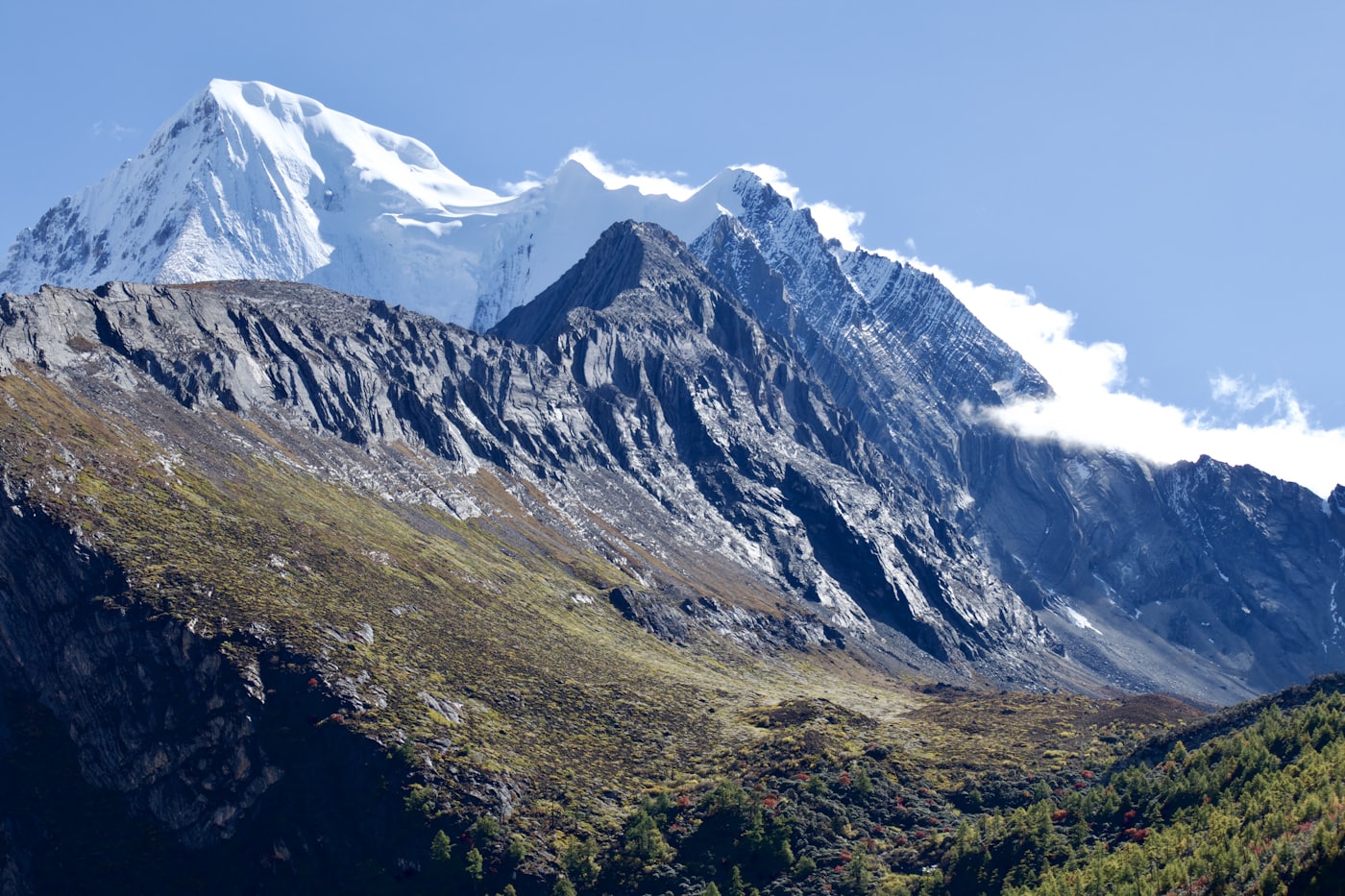
The sacred peaks of Yading, Western Sichuan, at about 4,000 meters.
Western Sichuan
West of Chengdu the plain ends and the Tibetan Plateau begins: this is the part of China that gets compared to Switzerland, except the mountains are two kilometers taller. The headline hike is Yading nature reserve — three holy peaks, milk-blue lakes — and the golden season is October.
Fly into Chengdu, acclimatize a day (pandas count as acclimatizing), then either fly to Daocheng or do the famous G318 road trip over the passes. Altitudes run 3,500–4,700 m, so take it slow the first days. Combine with the city's teahouses and hotpot on the way out.
One province with snow mountains, rice terraces, old towns and jungle. If you only make one trip beyond the cities, make it this one.
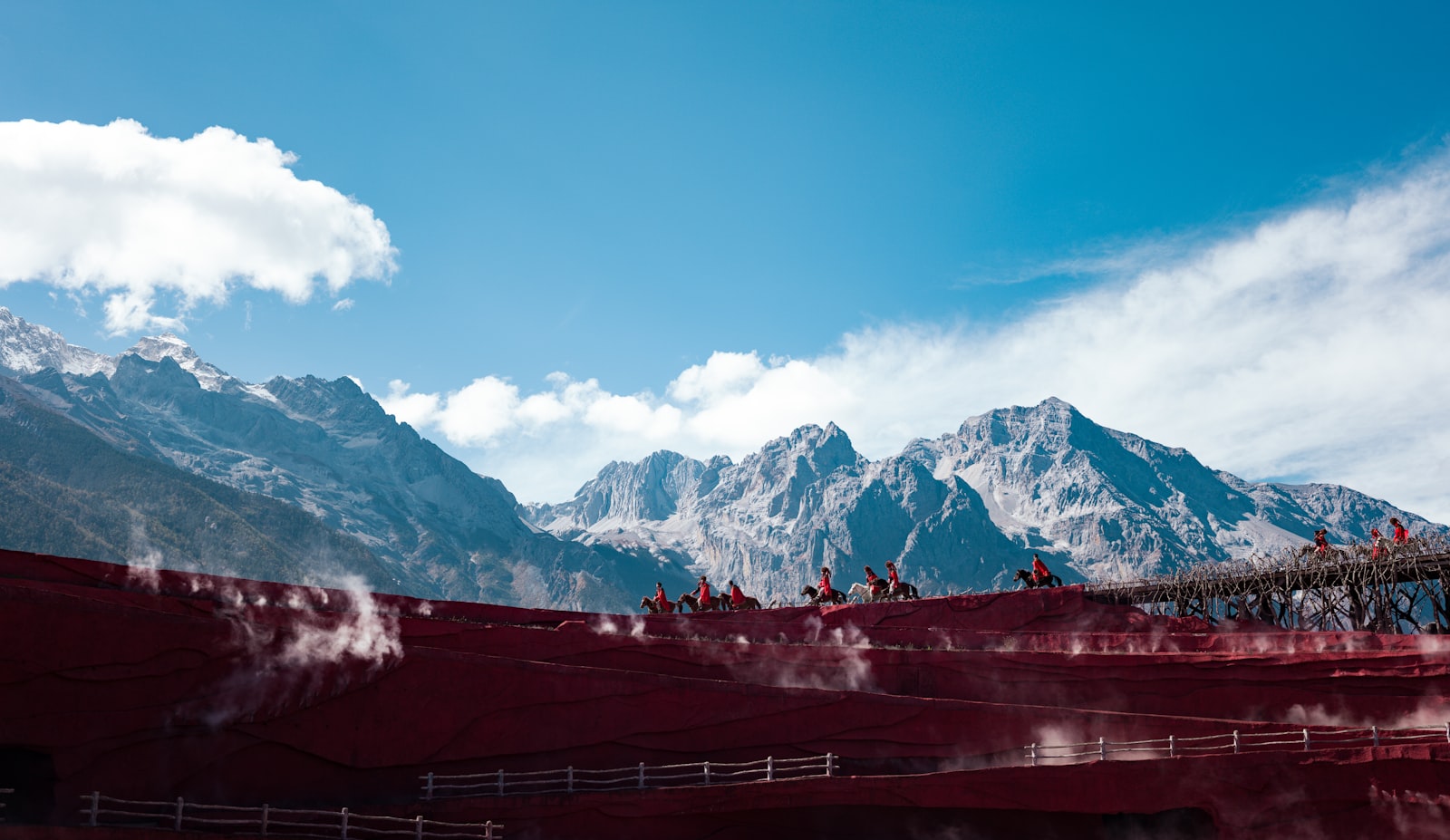
Jade Dragon Snow Mountain outside Lijiang, backdrop of the open-air "Impression Lijiang" show.
The classic route runs Kunming → Dali → Lijiang by train, climbing from lake country to the foot of the 5,596-meter Jade Dragon Snow Mountain. Lijiang's old town is canals, cobbles and rooftops; touristy in the middle, quiet and lovely at the edges early in the morning. Push on to Tiger Leaping Gorge for the best two-day hike in the country, or further up to Shangri-La for Tibetan monasteries.
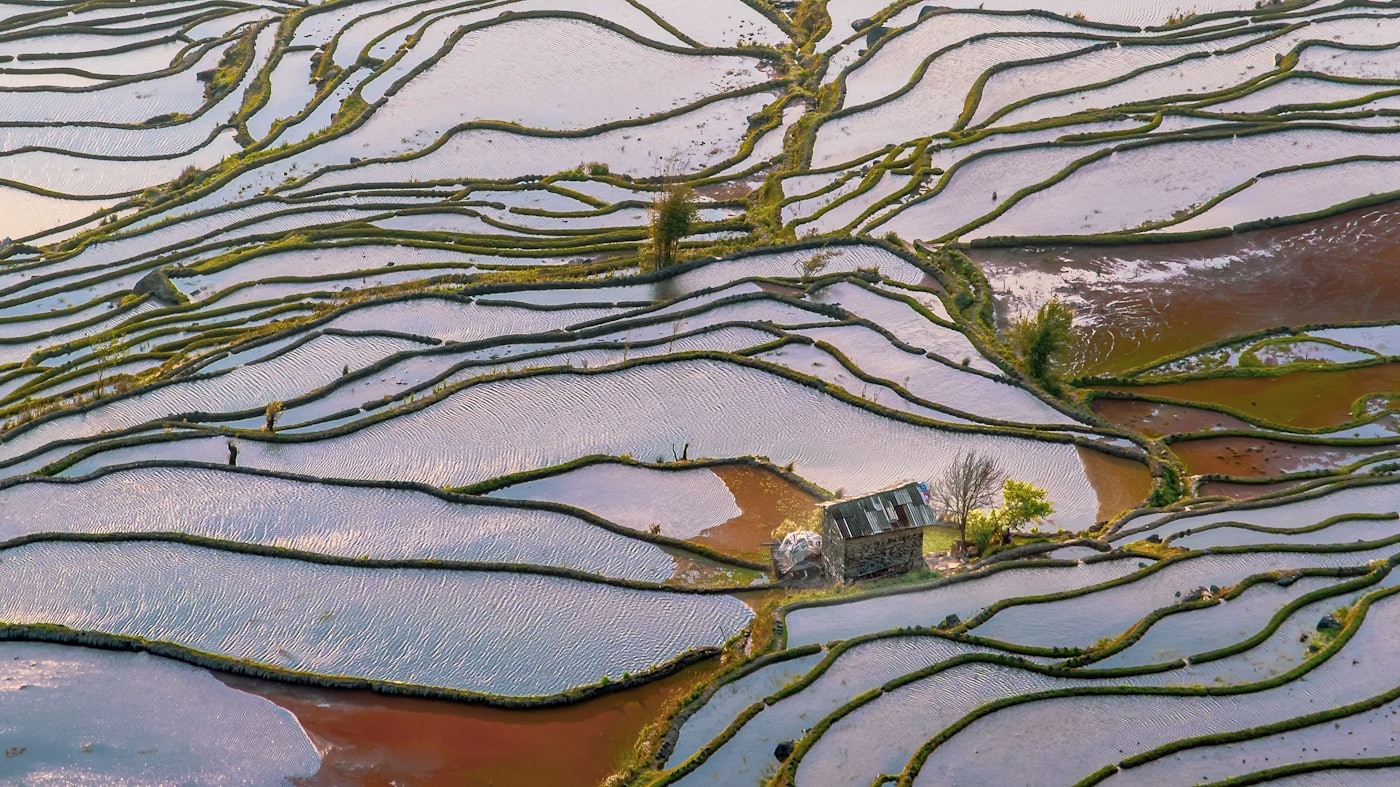
The Yuanyang rice terraces in southern Yunnan, flooded and mirror-like from December to March.
South of Kunming, the Hani people have carved whole mountainsides into rice terraces over 1,300 years. Come in the flooded winter season and sunrise turns thousands of paddies into mirrors. It's a long way from anywhere and worth every hour of the drive. A relaxed Yunnan loop deserves seven to ten days; hotels in the old towns are charming and cheap.
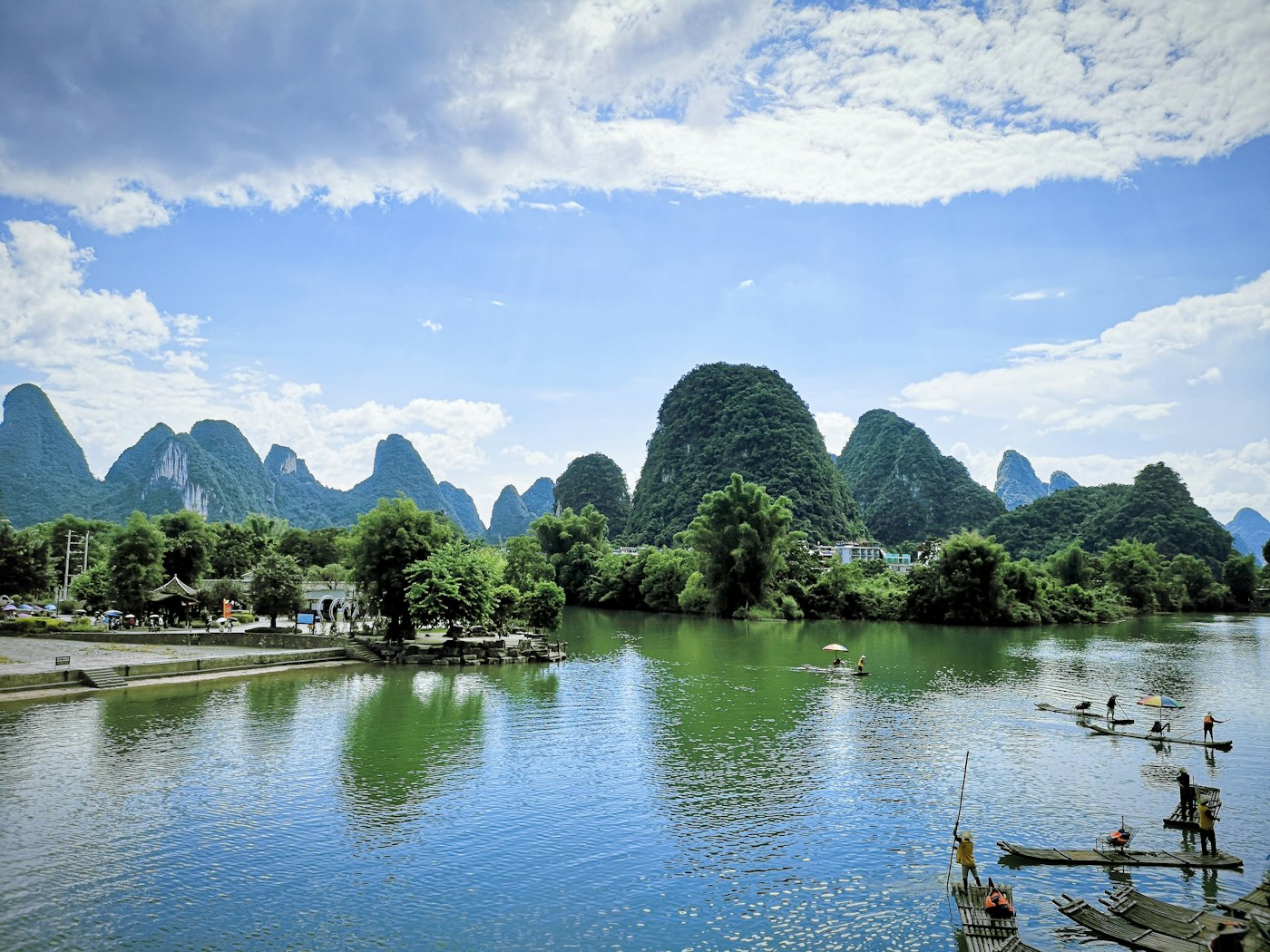
The Yulong River near Yangshuo. The 20-yuan banknote was drawn a few bends downstream.
Guilin & Yangshuo
The karst hills along the Li River are the oldest cliché in Chinese landscape painting, and they still work. Take the half-day boat from Guilin to Yangshuo, then base yourself in Yangshuo: cycle between the peaks, float the Yulong River on a bamboo raft, climb one hill for sunset. Two or three unhurried days. Avoid national holidays, when half of China has the same idea.
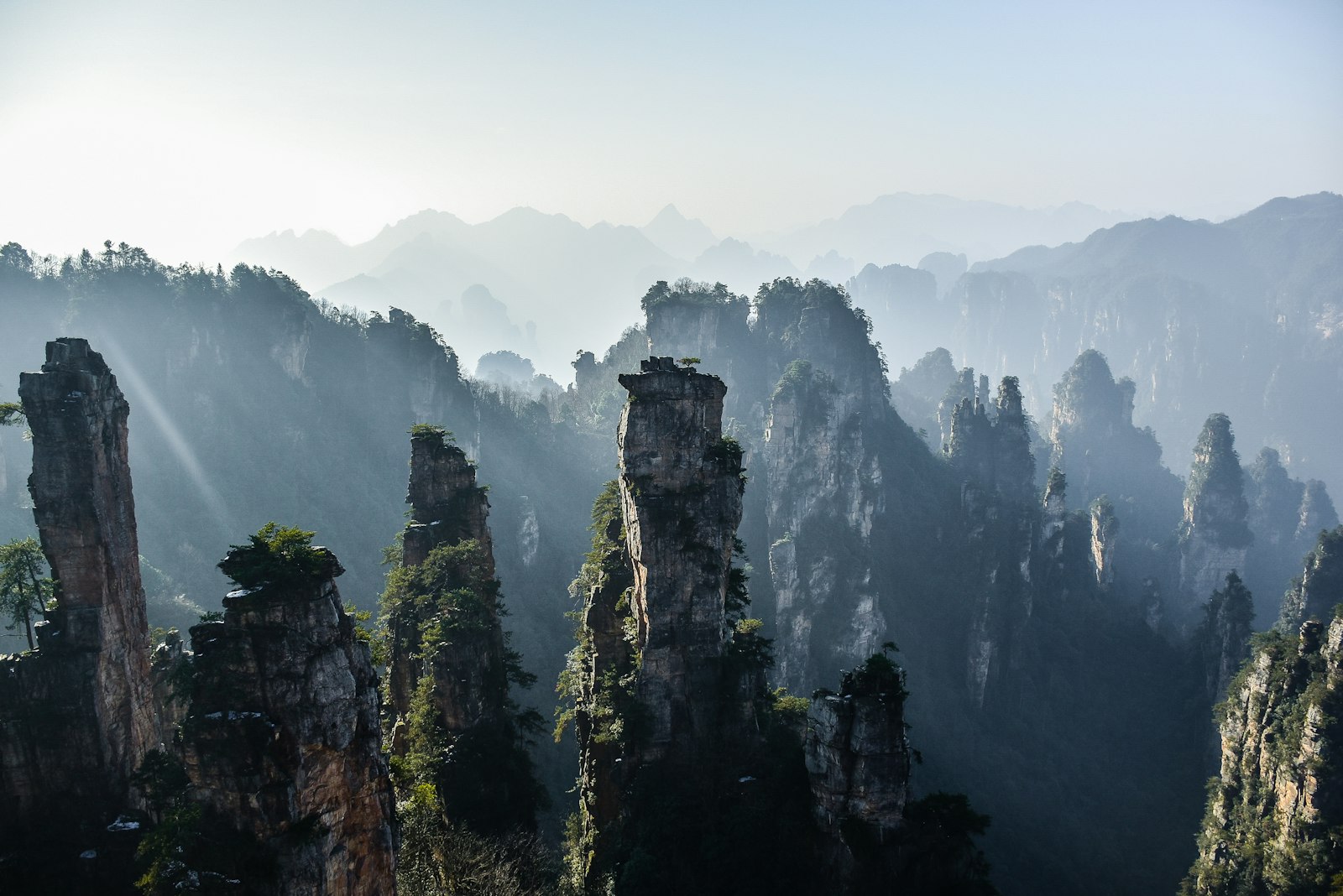
The sandstone pillars of Zhangjiajie — the mountains that inspired Avatar's floating islands.
Zhangjiajie
Three thousand sandstone towers rising out of the mist in Hunan province. The Yuanjiajie section is the one from the movie; Tianmen Mountain nearby adds a cliff-face glass walkway and a cable car that runs seven kilometers over the city. Go at opening time — the parks are genuinely crowded by mid-morning — and give it two to three days.
All hotel links on this page go to Trip.com, which has by far the deepest hotel inventory inside China and an English site that actually works. Same prices as going direct; the site earns a small referral commission if you book, which is what keeps wlala running.